Elgato is the name most people know when they first search for a capture card. Magewell is the name that comes up when those same people need something that doesn't drop frames in a six-hour stream, works across Windows updates without a driver reinstall, and scales to a three-camera professional rig without burning through CPU. This isn't a brand loyalty argument, it's a practical comparison of who each product is designed for.
Who Each Brand Is Built For
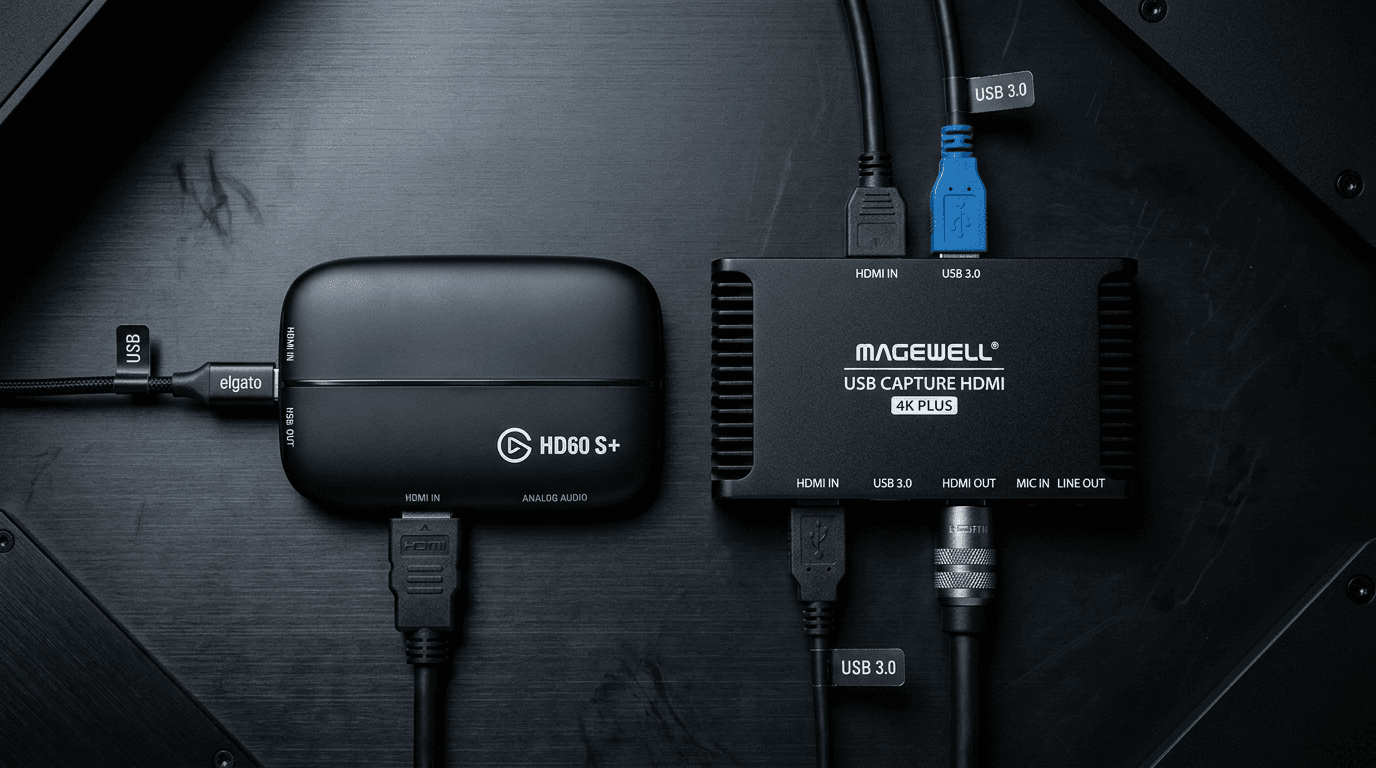
Elgato (owned by Corsair) targets streamers, console gamers, and content creators, a consumer and prosumer audience. Their products are price-competitive, marketed aggressively in gaming and streaming communities, and work well for their intended use case: capturing one console source, streaming at 1080p, with a simple setup. The Elgato 4K60 Pro and HD60 S+ are capable devices for that context.
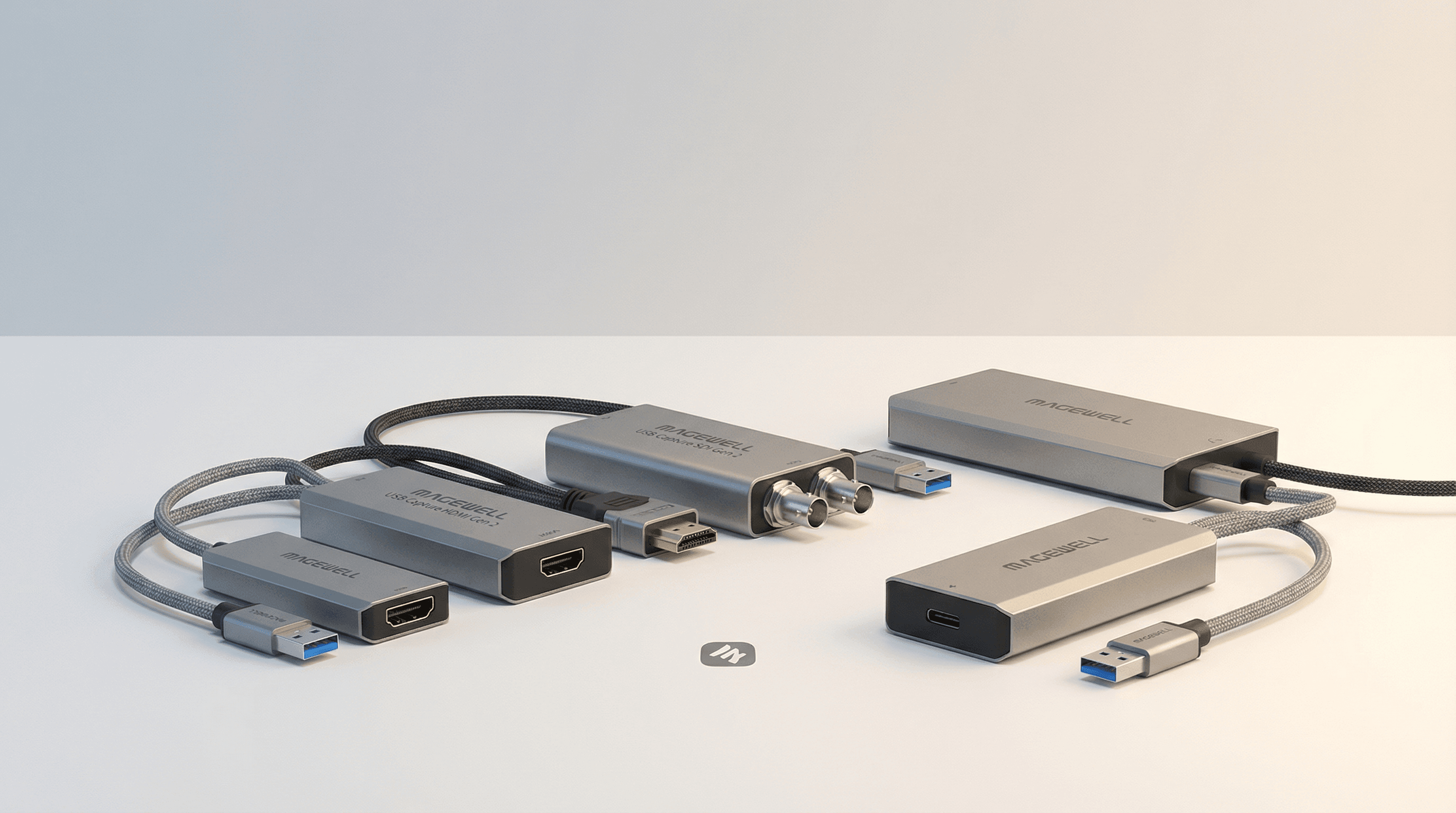
Magewell is a professional broadcast and production manufacturer. Their clients include broadcasters, universities, hospitals, and enterprise AV, environments where reliability, driver stability, and compatibility with professional software are non-negotiable. The USB Capture family brings Magewell's broadcast-grade engineering to a USB form factor accessible to any workflow.
Neither is wrong. The question is which is right for your workflow.
The Technical Differences That Matter
- Driver architecture, Elgato devices require their 4K Capture Utility or OBS plugin and custom drivers. Windows updates can break these; firmware updates are needed to fix them. Magewell USB capture devices use the OS-native UVC class, no custom drivers. They work with any software that accepts a webcam: OBS, vMix, Zoom, Teams, Skype, or any professional production tool. Driver stability is effectively guaranteed because the OS handles it.
- Processing, Magewell uses an onboard FPGA for format conversion, scaling, and deinterlacing in hardware. Your CPU receives a clean, ready-to-encode video stream. Elgato consumer devices do more processing in software, which can increase CPU load, noticeable when you're also running a game, OBS, and a browser simultaneously.
- Multi-device scaling, Running two or three Magewell devices simultaneously is a standard use case; they behave identically and independently. Elgato's software stack is designed primarily for a single-device workflow; multi-device setups can require additional configuration and may conflict.
- Professional software compatibility, Magewell is tested and certified with vMix, Wirecast, NewTek TriCaster, and similar professional production platforms. Elgato is tested with its own app and OBS. For enterprise or broadcast deployment, that certification matters.
- Build quality and longevity, Magewell devices are built for continuous operation in professional environments. The USB Capture HDMI Gen 2 ships with a 3-year warranty and is designed for all-day, every-day use. Consumer Elgato hardware carries a shorter warranty and is designed for typical home-use cycles.
When Elgato Is Fine
For casual gaming capture, occasional streaming from a single console source, and hobbyist content creation on a tight budget, Elgato's consumer line does the job. If your use case is simple, the setup is straightforward, and you're not planning to scale to multi-camera or professional software, you'll get good results. The HD60 S+ and 4K60 Pro are solid products in their intended context.
When Magewell Is the Right Call
- You need driver-free deployment across multiple machines or enterprise environments where IT controls software installs.
- You're building a multi-camera rig with two or more capture devices running simultaneously.
- You use professional production software (vMix, Wirecast, NewTek, Tricaster, or Teams Rooms infrastructure).
- You need the device to work after a Windows update without reinstalling drivers or rebooting three times.
- You're deploying in a corporate, education, or broadcast setting where reliability isn't a preference, it's a requirement.
- You want to use the same device with OBS one day and Zoom the next without any reconfiguration.
Price Difference
Magewell USB Capture devices cost more than Elgato consumer hardware. The USB Capture HDMI Gen 2 is priced as professional broadcast equipment, not as a gaming peripheral. For professional and enterprise buyers, the total cost of ownership (including support time, driver incidents, and the cost of a failed stream) makes the price difference rational. For a hobbyist on a budget, Elgato's lower entry price is a legitimate factor.
Next Steps
If you've decided professional capture is the right call, browse the StreamKit USB Capture range for specs and pricing. We supply Magewell to businesses, broadcasters, and universities across the UK and EU. Contact us if you'd like advice on the right model for your use case, we're used to talking to buyers moving up from consumer hardware.